

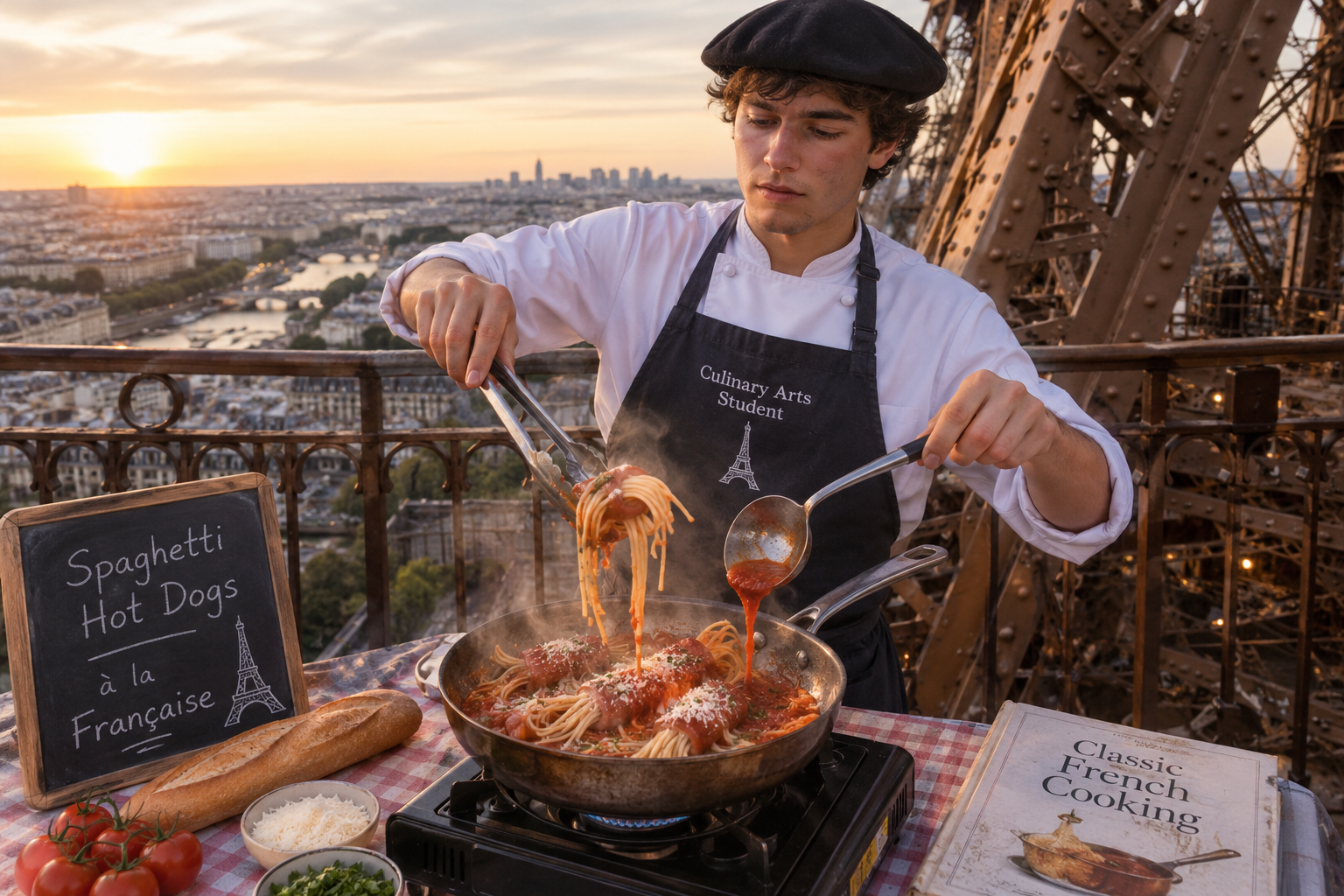
Study Abroad Opportunities: Culinary Arts in France
Classical French Cooking Influenced by the American Hot Dog
For students passionate about Culinary Arts, studying abroad in France offers an extraordinary opportunity to experience the traditions that have shaped professional cooking for centuries. French culinary education emphasizes precision, technique, presentation, sauces, stocks, pastry, and an appreciation for high-quality ingredients. For students interested in exploring culinary traditions from an unconventional perspective, France can also provide an ideal setting for examining how classical French cooking might be influenced by one of America's most recognizable foods: the hot dog.
Learning the Foundations of French Cuisine
A culinary arts study-abroad experience in France allows students to develop a strong foundation in classical French cooking. Students can study techniques such as sautéing, roasting, braising, poaching, sauce preparation, vegetable fabrication, meat preparation, and pastry production. They can also explore the importance of French culinary principles such as mise en place, seasonality, balance, and presentation.
The hot dog provides an amusing but surprisingly useful vehicle for applying these techniques. Rather than simply placing a frankfurter in a bun, students can consider how a familiar American food might be reinterpreted through the lens of French cuisine.
From Street Food to French Culinary Technique
A French-inspired hot dog could become a practical exercise in classical culinary technique. A traditional sausage might be prepared using French methods and accompanied by sauces derived from the country's culinary repertoire. For example, students could explore combinations involving Dijon mustard, béarnaise, bordelaise, or other classic preparations.
The bun itself could become an opportunity to study French baking. Instead of relying on an ordinary commercial roll, students might experiment with a brioche-style bun, baguette-inspired bread, or another carefully prepared dough. This approach transforms the humble hot dog into a platform for studying fermentation, dough development, texture, and presentation.
Even the garnishes could become a lesson in French cuisine. Caramelized onions, pommes frites, cornichons, gruyère, herbs, and carefully prepared vegetables can introduce students to the importance of contrasting flavors, textures, and temperatures.
A Cross-Cultural Culinary Experience
The intersection of classical French cooking and the American hot dog also illustrates an important lesson about contemporary cuisine: culinary traditions are constantly evolving. Studying in France gives students an opportunity to understand French food on its own terms while simultaneously considering how chefs can reinterpret familiar foods through new techniques and cultural influences.
This type of experimentation encourages students to think beyond recipes. Instead of asking simply, "How do I cook a hot dog?" a culinary student can ask, "How would a French chef approach this ingredient, and what techniques could transform it?"
Such questions encourage creativity while reinforcing the technical discipline required of professional chefs.
Opportunities Beyond the Classroom
A study-abroad program in France can extend culinary education well beyond the kitchen. Students may have opportunities to visit markets, bakeries, restaurants, food producers, culinary schools, and regional food destinations. Exploring these environments can provide firsthand exposure to French ingredients and food culture.
Students can also compare regional French traditions and consider how a hot dog-inspired dish might change depending on the culinary environment. A preparation inspired by Parisian cuisine could differ substantially from one influenced by Alsace, Lyon, Provence, Brittany, or the French Riviera.
Developing the Modern Chef
Ultimately, the value of studying Culinary Arts in France is not merely learning how to reproduce traditional dishes. It is learning the techniques, discipline, history, and culinary vocabulary necessary to create something new.
The combination of classical French cooking and the American hot dog may initially seem unconventional—and that is precisely what makes it an interesting educational exercise. By taking an everyday food and subjecting it to rigorous French culinary techniques, students can explore questions of tradition, innovation, cultural exchange, and culinary identity.
For aspiring chefs, France therefore offers more than an opportunity to learn classical cuisine. It provides a setting in which students can learn how to take established culinary principles and apply them creatively—even to something as familiar as the humble hot dog.